 +86 15338350382

 English
 Spanish
 French
 Russian
 Italian
 German
 Japanese

 8 min readPublished Sep 23 2026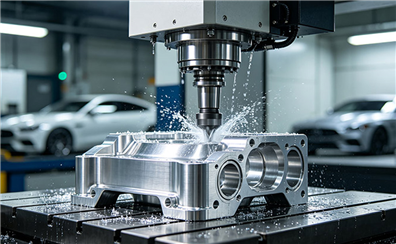
In the modern automotive manufacturing industry, CNC machining has become one of the core technologies for producing high-precision automotive components. Whether for traditional internal combustion engine vehicles or new energy vehicles, a wide range of critical components rely on CNC machining to achieve stringent dimensional tolerances, stable assembly precision, and reliable performance. This article provides a professional analysis of common types of CNC-machined automotive parts and their key processing considerations.
Why Choose CNC Machining for Automotive Parts?
Automotive components must withstand vibration, pressure, temperature fluctuations, and high-speed operation during service, making dimensional accuracy and structural stability critically important. Precision CNC machining uses computer programs to control machine movements, achieving more stable processing results and reducing errors caused by manual operations.
The core advantages of CNC machining in the automotive industry include:
High Precision & Consistency: CNC machining consistently achieves tolerances of ±0.05mm or better, ensuring part consistency across production runs.
ool-Free, Rapid Response: Unlike traditional casting or forging, CNC machining does not require complex molds, making it ideal for prototyping and low-volume production.
Broad Material Compatibility: Supports aluminum alloys, stainless steel, titanium alloys, engineering plastics, and more to meet diverse performance requirements.
Complex Geometry Capability: Multi-axis CNC equipment can perform milling, turning, drilling, tapping, and other operations in a single setup.
Common Automotive Parts Produced by CNC Machining
1. Powertrain Components
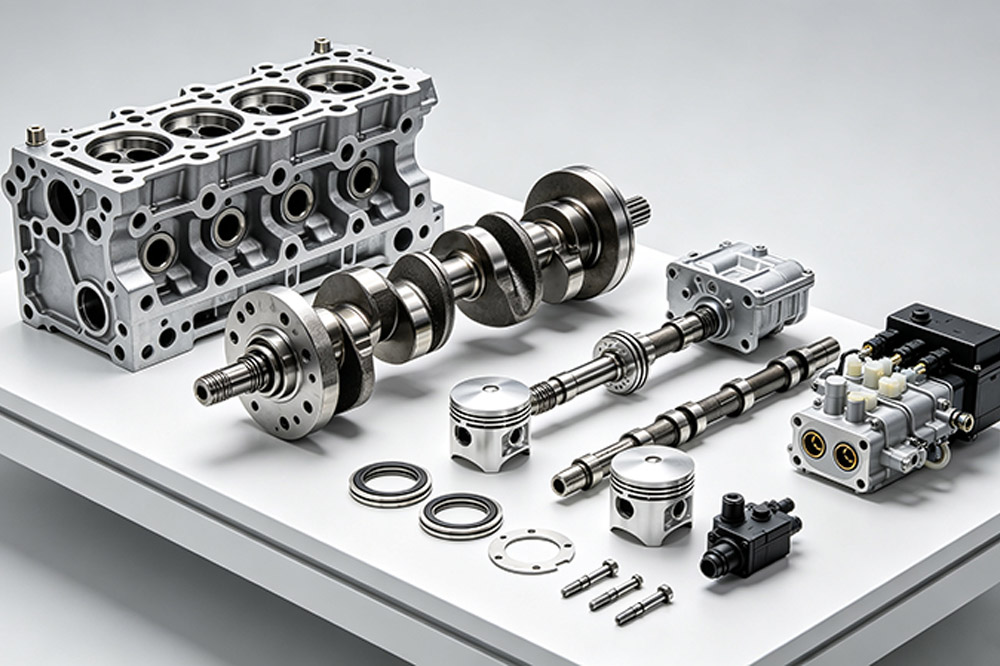
Powertrain components are among the most common CNC-machined automotive parts. Engines, motors, pumps, and related drive assemblies rely on precision fits and stable geometries. Typical CNC-machined powertrain parts include:
Engine Blocks & Cylinder Heads: Require precision boring, flat mounting surfaces, and controlled sealing surfaces
Crankshaft & Camshaft Components: Demand high concentricity, roundness, and surface finish
Pistons & Piston Pins: Need precise diameter control and thread quality
Fuel injection system components: Involving precise diameters and sealing interfaces
These parts are particularly well-suited for CNC machining because they typically combine critical diameters, thread features, shoulders, and sealing surfaces—even minor dimensional deviations can affect vibration, bearing life, or sealing performance.
2. Drivetrain Components
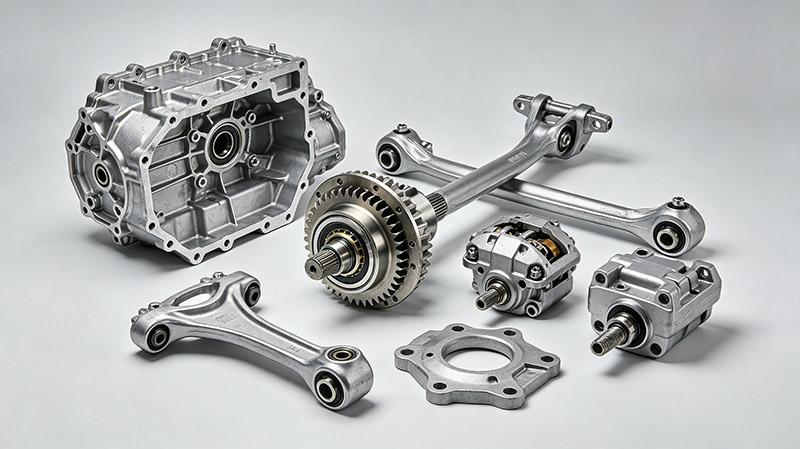
Drivetrain-related components represent another major category of CNC-machined automotive parts. Many drivetrain components rely on stable bore alignment, precise shaft geometry, and accurate bearing or sealing interfaces. Common parts include:
Transmission & Drive Shafts: Require excellent coaxial alignment across multiple journals, threads, and bearing seats
Transmission Housings: Hole position and face flatness are more critical than external shape—even slight deviations can cause misalignment, leakage, or abnormal wear
Differential Housings: Need precise bearing interfaces and sealing surfaces
Gear Shaft Sleeves & Clutch Assemblies: Demand strict fit control and axial stability
These components typically operate under rotational loads, so dimensional consistency affects not only assembly but also long-term wear and NVH (Noise, Vibration, and Harshness) performance.
3. Brake System Components
Brake system components have extremely high safety requirements, and CNC machining plays a critical role in their manufacture:
Brake Calipers: Typically CNC-machined from high-rigidity cast iron or aluminum for reliable braking performance
Brake Brackets & Steering Knuckles: Forging plus CNC finishing for impact resistance
Brake Rotors: Require precise flatness and surface quality
4. Suspension & Steering System Components
Suspension and steering components directly affect vehicle handling and safety. CNC machining ensures mounting precision and structural integrity:
Control Arms: CNC-machined control arms ensure precise mounting interfaces and geometry
Steering Gear Housings: ADC12 aluminum steering gear housings are typically precision-machined on 5-axis CNC machining centers
Suspension Brackets & Supports: Require precise hole positions, flat mounting surfaces, and repeatable feature relationships
5. Thermal Management System Components
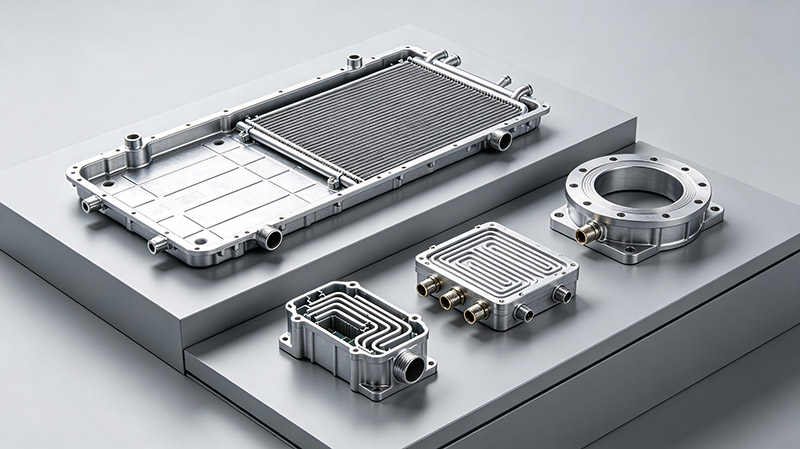
With the growing adoption of new energy vehicles, thermal management components represent an increasing share of CNC-machined automotive parts. These include:
Cooling Plates & Heat Exchange Interfaces: Require flow channel precision, flatness, and sealing quality
Radiator Housings: Involve complex geometries and optimal heat dissipation performance
Coolant Outlet Assemblies: Need precise pipe shapes and sealing interfaces
l Battery Tray Components: Require precise mounting hole positions and structural strength
For these parts, flatness, flow channel accuracy, wall thickness stability, and surface condition are all critical—minor errors can reduce thermal contact efficiency or create leakage risks.
6. Housings & Brackets
Housings and brackets are among the most common—and most easily underestimated—CNC-machined automotive parts:
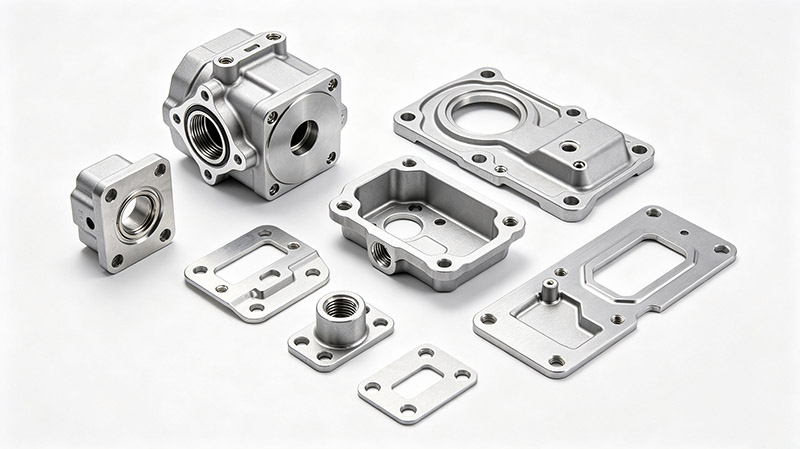
Various Housings (transmission housings, pump housings, sensor housings, etc.): The most critical features are hole positions, sealing surfaces, bolt hole patterns, and datum surfaces
Mounting Brackets & Support Plates: Though they may appear simple, they function as precision interfaces rather than merely structural supports, requiring precise hole positions and datum control
Sensor Mounts: Position accuracy directly affects sensor performance, making them ideal candidates for CNC machining
Alcro's CNC Machining Capabilities for Automotive Parts
As an ISO 9001-certified precision manufacturing service provider, Alcro brings extensive experience and comprehensive technical capabilities to CNC machining of automotive parts.
Core Manufacturing Capabilities:
CNC Milling (3-axis, 4-axis, 5-axis)
CNC Turning
Swiss Lathing
EDM (Electrical Discharge Machining)
Sheet Metal Fabrication & Surface Finishing
Quality Assurance:
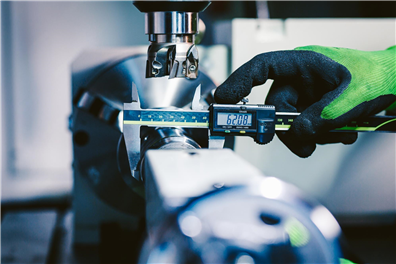
Alcro provides CMM inspection reports, first article inspection reports, material certificates, and certificates of conformance, ensuring every automotive part meets strict specifications and performance standards. Tolerances can be controlled to ±0.05mm or better.
Flexible Service Models:
No Minimum Order Quantity (No MOQ)—supports single prototypes to production runs
Fast Turnaround—prototype parts available in as fast as 2 days
DFM (Design for Manufacturing) feedback to optimize part designs
Whether for engine-adjacent components, drivetrain assemblies, brake system parts, or new energy vehicle thermal management components and sensor mounts, Alcro provides one-stop CNC machining services from prototyping to production.
Conclusion
CNC machining plays an irreplaceable role in automotive component manufacturing. From powertrain to drivetrain, from brake systems to suspension and steering, from thermal management to various housings and brackets, CNC machining supports the automotive industry's demanding requirements for components with its advantages of high precision, consistency, and flexibility.
Choosing a partner with professional CNC machining capabilities means not only obtaining high-quality automotive parts but also benefiting from faster response times and more reliable quality assurance across prototyping, product iteration, and volume production.
For more information about CNC machining for automotive parts, or to discuss custom automotive component manufacturing needs, please contact the Alcro team.



 sophia@alcrocn.com
 +86 15338350382
 6th North Street, Xiagang Community, Chang'an Town, Dongguan City, Guangdong Province, China.
